
Quick Summary
If your water heater has started popping, takes longer to recover, or runs out of hot water sooner than it used to, hard-water sediment may be part of the problem. Mineral buildup inside a tank can interfere with heat transfer, reduce performance, and contribute to premature equipment failure. In the Temecula Valley, where many homes receive hard water, regular maintenance and appropriate water treatment can help protect your water heater. Understanding the warning signs can help you determine when maintenance may be enough and when professional inspection, repair, or replacement makes more sense.
Popping and rumbling noises can indicate sediment buildup inside a tank water heater.
Reduced hot water capacity and slower recovery may indicate mineral buildup or a failing component.
Rancho California Water District has reported average water hardness levels that fall within the very hard classification.
Regular flushing, anode rod inspections, and appropriate water treatment can help protect your water heater.
A leaking valve or failed heating element may be repairable, while a leaking storage tank generally requires replacement.
Why Hard Water in the Temecula Valley Wears Out Water Heaters Faster
Hard water contains elevated levels of dissolved minerals, primarily calcium and magnesium. These minerals enter the water naturally as it moves through rock and soil. The U.S. Geological Survey (USGS) explains how dissolved mineral concentrations determine water hardness and contribute to scale formation.
Across the Temecula Valley and surrounding communities, many homeowners experience the visible effects of hard water, including white deposits on faucet aerators, mineral buildup on showerheads, spotting on glassware, and reduced soap effectiveness.
How Hard Is the Water in the Temecula Valley?
According to the Rancho California Water District’s water quality FAQ, water hardness in its service area has averaged 192 milligrams per liter (mg/L), or approximately 11 grains per gallon. The USGS classifies water containing more than 180 mg/L of hardness as very hard.
Local Water Hardness Compared With USGS Classifications
192 mg/L
Approximately 11 grains per gallon | Rancho Water reported average
0-60 mg/L
61-120 mg/L
121-180 mg/L
Over 180 mg/L
Sources: Rancho California Water District FAQ and USGS water hardness classifications. The chart uses an illustrative scale of 0 to 240 mg/L. The very hard classification has no upper limit. Actual household water hardness varies by supplier, water source, and existing water treatment.
Not every home in Temecula, Murrieta, Lake Elsinore, Menifee, or Wildomar receives water with the same mineral concentration. Water hardness can vary depending on your water district, the blend of imported water and groundwater, and whether your home has a water softener.
Homeowners can review their water supplier’s water quality report or have their household water tested to determine the actual hardness level entering their plumbing system. Rancho Water customers can find additional information on the district’s water quality information page.
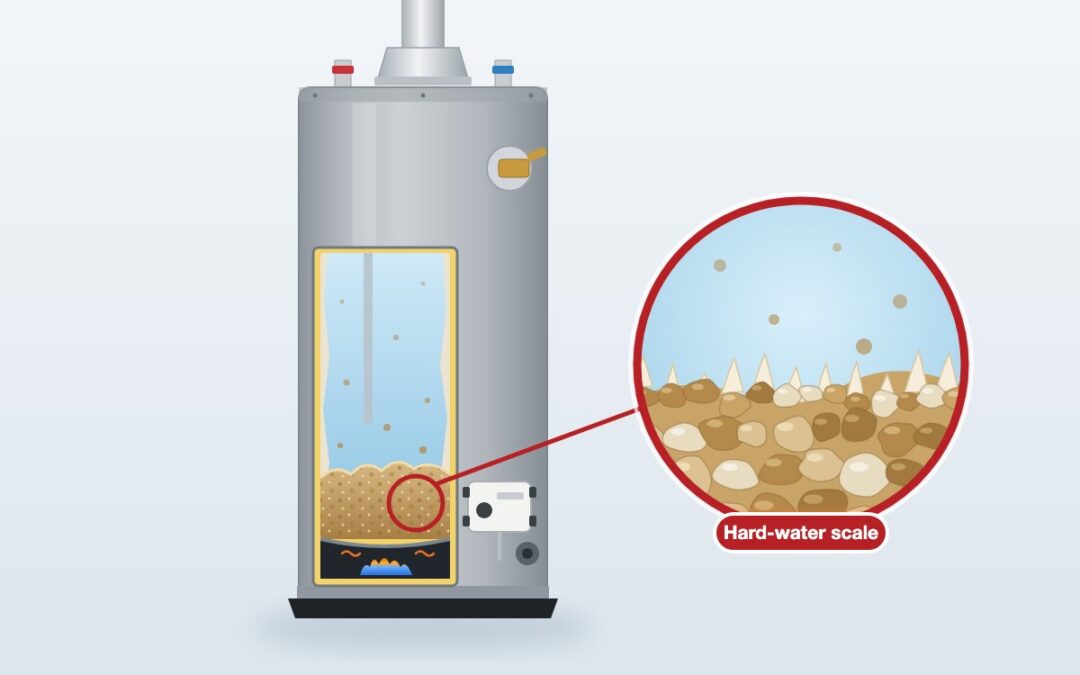
Inside a tank water heater, heating hard water encourages certain dissolved minerals, particularly calcium carbonate, to form solid deposits. Some deposits accumulate as loose sediment at the bottom of the tank, while others adhere to internal surfaces and heating components as hardened scale.
Over time, these deposits can interfere with water heater performance. The same mineral buildup that accumulates on your showerheads can also develop inside the appliance responsible for supplying hot water throughout your home.
For a broader look at mineral buildup, read our guide to how hard water affects your whole plumbing system. If you are already experiencing equipment problems, our water heater service and repair page explains how we can help.
Signs Hard Water May Be Damaging Your Water Heater
You do not necessarily need specialized equipment to recognize that your water heater is experiencing problems. Changes in noise, hot water availability, recovery time, and water appearance can provide useful clues about its condition.
Popping and Rumbling Noises
A water heater that begins making popping, knocking, or rumbling noises may have accumulated sediment at the bottom of its tank. On a gas water heater, water trapped beneath sediment can heat up and produce steam bubbles that make noise as they escape through the deposits.
According to A.O. Smith’s water heater noise troubleshooting guidance, mineral buildup is one possible explanation for popping sounds. Other noises may indicate different equipment or plumbing problems, so the sound alone is not enough to establish a diagnosis.
Running Out of Hot Water Sooner
If your household used to have enough hot water for several consecutive showers but now runs out much sooner, sediment buildup may be contributing to the problem.
A substantial accumulation of sediment can occupy space inside the tank and interfere with heating performance. However, a failing electric heating element, damaged dip tube, thermostat problem, or increase in household hot water demand can produce similar symptoms.
Slow Hot Water Recovery
Recovery time refers to how long your water heater takes to replenish its supply of hot water after a significant amount has been used.
Mineral deposits can interfere with heat transfer in certain types of water heaters, potentially increasing recovery time. If your tank takes noticeably longer to reheat after showers, baths, or laundry, a plumber can determine whether sediment, scale, or a malfunctioning component is responsible.
Rust-Colored or Cloudy Hot Water
If your cold water runs clear but your hot water has a reddish or brown tint, corrosion inside the water heater or hot water piping may be involved. Water discoloration can also originate elsewhere in the plumbing system or water supply.
Cloudy water is a different symptom. The USGS explains that temporarily milky or cloudy water is often caused by tiny air bubbles escaping from the water. If the cloudiness clears within a short period, dissolved air may be responsible rather than mineral sediment.
Persistent cloudiness, visible particles, or repeated discoloration warrants further investigation.
Increased Energy Usage or Longer Heating Cycles
Mineral scale and sediment can interfere with water heater performance, depending on the equipment design and the amount of buildup present.
If your gas water heater appears to run longer than it used to while delivering less hot water, reduced heat transfer may be a contributing factor. Changes in household water use, colder incoming water, thermostat problems, and other equipment issues can also affect energy consumption.
Water Heater Warning Signs and Their Possible Causes
| Warning Sign | Possible Hard-Water or Tank-Related Cause | Other Potential Causes |
|---|---|---|
| Popping or rumbling | Sediment buildup or mineral deposits | Component vibration or other equipment noises |
| Running out of hot water | Sediment accumulation or reduced heating performance | Failed heating element, damaged dip tube, increased demand |
| Slow hot water recovery | Scale or sediment interfering with heating | Thermostat, burner, or heating element problems |
| Rust-colored hot water | Internal tank corrosion | Corroded plumbing or iron in the water supply |
| Cloudy hot water | Suspended sediment or mineral particles | Dissolved air escaping from the water |
| Water around the heater | Tank corrosion or structural failure | Leaking valve, pipe connection, or condensation |
| Increased energy usage | Reduced heat transfer or equipment performance | Higher water usage, colder incoming water, equipment malfunction |
These symptoms can help identify potential problems but do not establish the cause of a water heater malfunction. A professional inspection may be necessary to distinguish sediment buildup from other equipment failures.
How Sediment Buildup Shortens a Water Heater’s Lifespan
A water heater operates most effectively when its heating surfaces can transfer energy into the water without substantial mineral interference. As sediment and scale accumulate, they can affect how that heat moves through the equipment.
In a conventional gas water heater, a substantial layer of sediment at the bottom of the tank can interfere with heat transfer and contribute to localized overheating of the tank surface. Over time, this additional thermal stress may contribute to equipment deterioration.
In electric water heaters, mineral scale can accumulate directly on the heating elements. Heavy deposits may interfere with heat transfer from the element into the surrounding water and contribute to premature element failure.
How Hard Water Affects Gas and Electric Water Heaters Differently
Illustrative cross-sections showing common locations of mineral buildup. Actual water heater construction and deposit patterns vary by manufacturer and model.
The Role of the Anode Rod in Preventing Tank Corrosion
Most conventional glass-lined tank water heaters use a sacrificial or powered anode to help protect the steel tank from corrosion.
A sacrificial anode rod is designed to deteriorate preferentially, helping protect exposed metal inside the tank. Once the rod has substantially deteriorated, the tank may become more vulnerable to corrosion.
The rate of anode rod consumption depends on several factors, including water chemistry, electrical conductivity, anode material, water temperature, and operating conditions. Hardness alone does not determine how quickly an anode rod will wear out.
Regular inspection and timely replacement of a deteriorated sacrificial anode rod can help maintain the tank’s corrosion protection.
On service calls across Murrieta and Temecula, our technicians have encountered tank water heaters with substantial hardened mineral deposits, deteriorated anode rods, and equipment experiencing premature performance problems. In some of these homes, a lack of documented maintenance and untreated hard water have been contributing factors.
These conditions help explain why evaluating the water entering your home is an important part of protecting both your existing water heater and any replacement equipment.
An aging water heater can also affect hot water availability and other aspects of your home’s plumbing performance. We cover these issues in more detail in our guide to what an aging water heater does to the rest of your plumbing.
Maintenance That Slows Hard-Water Damage
Although you cannot eliminate normal equipment wear, appropriate maintenance and water treatment can help reduce mineral-related problems and protect your water heater. The right maintenance schedule depends on the equipment, household usage, water chemistry, and manufacturer recommendations.
Flush the Tank Regularly
Flushing a tank water heater helps remove loose sediment before additional deposits accumulate. Annual flushing is a reasonable starting point for many conventional tank water heaters, although homes with particularly hard water may benefit from a different maintenance schedule based on the manufacturer’s instructions and the amount of sediment present.
A.O. Smith’s water heater maintenance guidance includes routine tank flushing and anode rod inspection as important preventive maintenance practices.
If your water heater has gone several years without being flushed, an inspection may be advisable before attempting maintenance. Older drain valves can become difficult to operate, and accumulated sediment may obstruct the drain opening. Routine flushing can remove loose material but may not remove substantial deposits of hardened scale.
Inspect the Anode Rod
If your water heater uses a sacrificial anode rod, follow the manufacturer’s recommended inspection and replacement schedule. A plumber can evaluate whether the rod has deteriorated enough to require replacement and whether the tank shows signs of corrosion.
Installing a water softener does not eliminate the need for anode rod maintenance. In fact, A.O. Smith’s technical guidance on water softeners explains that certain softened water conditions can increase anode rod consumption.
This is one reason why water treatment and water heater maintenance should work together rather than be treated as interchangeable solutions.
Use an Appropriate Water Temperature
Higher water temperatures can encourage mineral precipitation and increase energy consumption. The U.S. Department of Energy recommends a water heater temperature setting of approximately 120 degrees Fahrenheit as an energy-saving measure for many households.
The appropriate temperature depends on your equipment, household needs, manufacturer instructions, and any health or safety considerations. Some plumbing systems require different storage temperatures and additional measures to control the temperature delivered at fixtures.
Ask your plumber to evaluate the appropriate setting for your particular system rather than increasing the temperature to compensate for declining water heater performance.
Treat the Water Before It Reaches the Heater
A properly selected water treatment system can help address mineral-related problems before water enters your water heater.
However, water softeners, salt-free conditioners, and water filtration systems serve different purposes.
| Water Treatment System | What It Does | Potential Water Heater Benefit |
|---|---|---|
| Water softener | Removes hardness minerals through ion exchange. | Can substantially reduce hardness-related scale formation. |
| Salt-free water conditioner | Designed to reduce mineral scale formation without removing hardness minerals. | May reduce scale accumulation depending on the technology and water chemistry. |
| Water filtration system | Targets specific particles, chemicals, or contaminants depending on the filtration technology. | Benefits depend on the system. Conventional sediment and carbon filters do not generally remove dissolved hardness minerals. |
The most appropriate option depends on your water quality, plumbing equipment, household preferences, and treatment objectives. We explain these differences in our guide to comparing softening, filtration, and salt-free conditioning.
Important Water Heater Maintenance Safety Note
Water heater maintenance can involve very hot water, pressurized plumbing, gas connections, and electrical components. Follow the manufacturer’s instructions and arrange professional maintenance if you are unfamiliar with the equipment. Do not attempt to operate damaged valves, disassemble electrical components, or perform gas-related repairs without appropriate qualifications.
Can Maintenance Reverse Existing Hard-Water Damage?
Regular maintenance can help slow future mineral buildup and protect equipment that is still in serviceable condition. However, maintenance cannot restore metal that has already corroded or reverse structural damage to a storage tank.
Flushing may remove loose sediment, while certain hardened deposits can require specialized cleaning or component service. Whether these procedures are appropriate depends on the type and condition of the equipment.
Even if your water heater has gone several years without maintenance, an inspection can help determine whether preventive service is still worthwhile.
If you are considering switching to a tankless water heater, remember that these systems are not immune to hard-water problems. Mineral scale can accumulate inside the heat exchanger, making periodic descaling important. Our tankless water heater service, installation, and repair page provides additional information about these systems.
When to Repair or Replace a Water Heater
A water heater experiencing performance problems does not automatically need replacement. Sediment buildup, a worn anode rod, a failed heating element, or a malfunctioning thermostat may be serviceable if the tank and remaining components are in good condition.
Water around the heater also does not necessarily mean the storage tank has failed. A leaking pipe connection, drain valve, temperature and pressure relief valve, or condensation may be responsible. Identifying the source of the water is an important first step.
If the storage tank itself has developed a leak because of corrosion or structural failure, replacement is generally necessary.
Manufacturer guidance from A.O. Smith on water heater repair and replacement identifies equipment age, component condition, and the nature of the problem as important considerations.
Water Heater Repair vs. Replacement
| Maintenance or Repair May Make Sense When | Replacement May Make Sense When |
|---|---|
| The storage tank remains structurally sound. | The storage tank itself is leaking. |
| Loose sediment can be removed through routine maintenance. | Significant corrosion or structural deterioration is present. |
| The sacrificial anode rod needs replacement. | The tank has sustained irreversible damage. |
| A thermostat, heating element, or other serviceable component has failed. | Multiple significant equipment problems are occurring. |
| The heater has otherwise performed reliably. | Repairs have become increasingly frequent. |
| The equipment is relatively new or a repair is covered by its warranty. | The equipment is approaching or beyond its expected service life and has significant problems. |
Age alone is not enough to determine whether a water heater should be replaced. A six-year-old water heater with a failed heating element may still have considerable useful life remaining, while a newer unit with a structurally compromised tank may require replacement.
The decision should account for the condition of the tank, the extent of mineral buildup, maintenance history, warranty coverage, and the reliability of the remaining components.
If replacement is necessary, evaluating the incoming water quality can help determine whether additional measures would protect the new equipment.
Expert Plumbing Insight
“Putting a brand-new heater on untreated hard water just starts the same clock over. If we are going to replace a tank, I want to know what is coming into it first.”
Jason Carroll
Owner and Lead Plumber, Canyon Hills Plumbing
California Contractors License #1010329 | C-36/C-42
What a Plumber Checks When Inspecting a Water Heater in a Hard-Water Home
Determining whether hard water has damaged your water heater requires more than listening for unusual noises. A professional inspection can help distinguish mineral-related problems from ordinary component wear, corrosion, plumbing issues, or changes in household demand.
Depending on the type of equipment and the symptoms you are experiencing, a water heater inspection may include:
Equipment age and maintenance history: Reviewing the age of the water heater, previous repairs, and whether routine maintenance has been performed.
Tank condition: Checking accessible areas for signs of corrosion, deterioration, and possible leaks.
Sediment and scale: Evaluating available evidence of mineral buildup and determining whether flushing or other maintenance may help.
Anode rod condition: Assessing the corrosion protection system when inspection is appropriate for the equipment.
Heating performance: Evaluating relevant heating elements, burners, thermostats, or other components based on the type of water heater.
Valves and plumbing connections: Identifying potential sources of leaks and checking accessible connections.
Incoming water quality: Evaluating whether water hardness or existing water treatment may be contributing to equipment problems.
Not every inspection requires disassembly or testing of every component. The appropriate evaluation depends on the condition of the equipment and the problems you have noticed.
The goal is to determine whether routine maintenance, a component repair, water treatment, or equipment replacement is the most appropriate next step.
Five Questions to Ask Before Replacing Your Water Heater
If you suspect hard water has shortened your water heater’s lifespan, ask your plumber these questions before deciding whether to repair or replace it.
- Is the storage tank damaged, or is the problem limited to a repairable component? A failed component does not necessarily mean the entire water heater needs replacement.
- Is the mineral buildup loose sediment or hardened scale? The type and location of the deposits can influence whether maintenance is likely to improve performance.
- What condition is the anode rod in? Understanding the tank’s corrosion protection can help determine whether additional preventive maintenance is appropriate.
- How hard is the water entering my home? Testing your household water provides a more accurate picture than relying on a regional average alone.
- What can I do to protect my existing or replacement water heater? Ask about appropriate maintenance intervals, water treatment options, and manufacturer recommendations.
These questions can help you address the underlying conditions affecting your water heater rather than simply replacing equipment without understanding why it developed problems.
Find Out if Hard Water Is Damaging Your Water Heater
If your water heater is making unusual noises, taking longer to heat water, or running out of hot water sooner than it used to, Canyon Hills Plumbing can help identify the cause.
Our team serves homeowners throughout the Temecula Valley and surrounding communities, including Temecula, Murrieta, Lake Elsinore, Menifee, and Wildomar. We can evaluate the condition of your water heater and recommend whether maintenance, repair, replacement, or water treatment makes sense for your home.
Canyon Hills Plumbing is a family-owned and operated plumbing company with more than 25 years of experience and over 1,000 five-star reviews. We operate under California Contractors License #1010329.
Whether your existing water heater needs service or you want to protect new equipment from mineral buildup, schedule a water heater inspection with Canyon Hills Plumbing to find out what is affecting your system and how to protect it moving forward.