Quick Summary
Clearing the same kitchen or main drain three times in a year is not normal wear, and it usually means the pipe itself has a problem the snake cannot fix. A drain that clogs on a predictable schedule is almost always pointing at one of three root causes: a blocked or undersized vent, a bellied line that sags and holds water, or hardened grease and hard-water scale narrowing the pipe wall. Snaking clears the symptom and buys you a few weeks or months, but it does not correct any of those. The only reliable way to know which one you are dealing with is a camera inspection instead of another blind snake pass. Once you know the cause, you can decide whether a cleaning, a descaling, a spot repair, or lining is the right call.
-
A one-off clog is bad luck; a repeat clog on a schedule signals a structural cause.
-
Gurgling, pooling, backups after rain, and sewage odor each point to different problems.
-
Snaking and augering clear symptoms but do not fix bellies, vents, or scale.
-
A camera inspection shows the actual pipe condition before you spend more money.
What Recurring Drain Clogs Signal About Your Pipes
A drain clogs once, you clear it, and it behaves for years. That is a normal clog. Something got rinsed down that should not have, it lodged in a fitting, and now it is gone. No mystery there.
A repeat clog is a different animal. You cleared the same line in the spring, again in the summer, and here it is backing up a third time before the year is out. When a drain reclogs on a roughly predictable rhythm, the pipe is telling you the debris has a place to catch and settle every time. Clearing it does not remove the place. It removes what collected there, so it fills back up.
That distinction matters because it changes what you should spend money on. Paying for another clearing on a line that reclogs every few months is paying to manage a symptom while the cause sits untouched underground, often under a slab. Real professional drain services start by figuring out why the drain keeps failing, not just how to open it one more time. In a 20-year-old Murrieta home on a slab foundation, the usual suspects are a small handful of fixable conditions, and they leave fingerprints you can learn to read.
Common Causes of Repeat Drain Clogs: Venting, Bellied Lines, and Grease Buildup
Every drain in your house is part of the drainage, waste, and vent system.
Blocked or Undersized Vents
The drainage and waste side carries water and solids out. The vent side lets air in behind that water so it flows smoothly, the same way you punch a second hole in a juice can to make it pour. When the vent is blocked or was undersized when the house was built, the water can pull a vacuum behind itself and drain slow and sputtery. You hear it. A sink gurgles when the tub drains, a toilet burps when the washing machine empties, drains run fine one minute and crawl the next. The Uniform Plumbing Code sizes vents specifically to prevent this, which is why a venting fault often produces that recognizable slow, gurgling drainage.
Bellied Lines That Sag and Hold Water
A bellied line behaves differently. Over 20 years, soil under a slab settles, and a section of pipe sags into a low spot. Water and solids reach that dip and stop moving. The line clears when you snake it because you punch a hole through whatever settled in the belly, but the belly is still there, so it fills again. The tells are a backup that clears and returns, drainage that gets noticeably worse after heavy rain when the soil is saturated, and a lingering smell from standing water that never fully leaves the low spot.
Grease and Hard-Water Scale Narrowing the Pipe
The third cause builds slowly. Grease that went down the kitchen sink cooled and stuck to the pipe wall, and every rinse after that added a little more. Government guidance on what does not belong down a drain is blunt about grease for exactly this reason: poured down kitchen drains, it accumulates inside sewer pipes and can back up untreated wastewater into homes and businesses. On top of that, the Temecula Valley runs hard water, and the USGS notes how mineral content in regional water leaves scale behind. That scale layers onto the grease and slowly shrinks the inside diameter of the pipe. A four-inch line quietly narrows toward two. The symptom here is gradual: drains that have been getting a little slower every year in an older, hard-water home, until the opening is narrow enough that any small blockage stops it cold.
In our experience on repeat-clog calls, a drain that reclogs on a predictable schedule almost always traces back to one of those three things: venting, a bellied line, or scale and grease. Guessing between them from up top is a coin flip, which is why we put a camera down before we recommend anything. In 25-plus years and better than 1,000 five-star reviews, that one pass has settled far more arguments than any amount of snaking, because it shows you the low spot holding water or the scale coating the wall instead of leaving you to infer it.
When a Drain Cleaning Is a Temporary Fix Versus a Lasting Solution
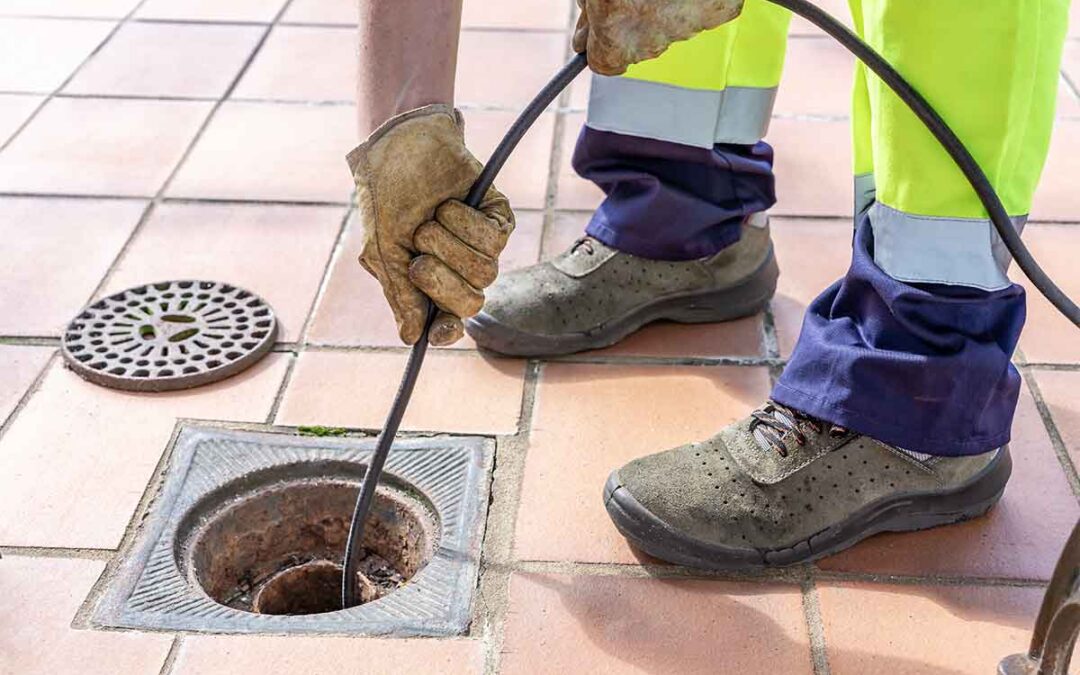
Here is the honest part. A cable machine or an auger is a clearing tool. It bores a channel through the blockage and gets you flowing again. On a genuine one-off clog, that is the whole job and it is done. On a belly, a vent problem, or a scaled pipe, it often buys you a few weeks or months and no more, and anyone who tells you otherwise is selling you the next visit.
Snaking a bellied line does nothing to the belly. Snaking a scaled pipe scratches a path through the buildup without removing the buildup. And a cable cannot address a vent at all, because the trouble is not in the drain you are clearing. That is why drain cleaning alone tends to keep failing on these lines. You are treating the wrong thing.
Hydro jetting is a step up because it uses pressurized water to scour the pipe wall rather than just poke through the middle, and on hardened grease it can genuinely restore flow. But jetting a bellied line still leaves the belly, and jetting will not repair broken or offset pipe. For heavy mineral scale, sewer pipe descaling with a chain-based tool is often the better match because it takes the hardened layer down to the pipe wall.
When the cause is structural, a belly or a badly deteriorated section, the lasting options are a spot repair, trenchless pipe lining, or replacement of the failed run. Nobody honest promises a drain will never clog again. What a real fix does is remove the reason it kept clogging on a schedule.
When to Escalate From Drain Cleaning to a Camera Inspection
You do not need to guess about any of this, and you should not pay for a fourth clearing without seeing inside the pipe first. A few clear thresholds mean it is time to escalate:
-
The same drain reclogs within weeks or a few months of being cleared.
-
More than one fixture is affected, which points toward a shared branch or main.
-
You hear gurgling or smell sewage, both signs of venting or standing-water trouble.
-
Backups get worse after rain, a classic bellied-line signature.
A camera inspection puts a waterproof video head down the actual line so a plumber can see the belly holding water, the scale coating the wall, or the crack letting soil in. That is information no amount of blind snaking produces. If you want the full picture of what a drain camera inspection reveals that snaking doesn’t, the short version is that the camera turns a guess into a diagnosis, and it locates the problem so any repair is targeted instead of exploratory.
One local note. If the trouble is out in your main sewer line, ownership in Temecula and the surrounding area is handled by Eastern Municipal Water District (EMWD), not the City. Under EMWD Ordinance 596, the lateral from the sewer main to your property or easement line is EMWD-owned, and you own the private piping inside your property line. That is the opposite of the general California rule many websites repeat, so confirm the boundary with EMWD before assuming a repair is on you.
What Drives the Cost of Diagnosing and Fixing a Recurring Clog
Nobody can quote a real number for your line without seeing it, and any figure thrown out before a camera goes down is a guess. What actually moves the cost is worth understanding so the estimate makes sense when you get it.
Access is the big one. On a slab foundation, a bellied or broken section may sit under concrete, which is far more involved to reach than a line in a crawl space or an accessible cleanout. Depth and length matter too; a long, deep run costs more to inspect and repair than a short shallow one. The pipe material factors in, since old cast iron and clay behave differently than newer ABS or PVC.
Then there is the nature of the fix itself. A cleaning or a descaling sits at one end. A spot repair on a single failed section is more. Lining a longer run or full replacement is the larger job, though trenchless lining often costs less in labor and restoration than digging up a slab and yard. The camera inspection is what sorts your line into the right category before a dollar goes toward the wrong solution.
Get a Straight Answer From Canyon Hills Plumbing
If you have cleared the same drain three times this year, the next smart dollar goes toward finding out why, not toward another clearing that resets the clock. Canyon Hills Plumbing is a family owned and operated company with more than 25 years of experience, over 1,000 five-star reviews, and CA Contractors License #1010329, and we would rather show you what is actually happening in your pipe than sell you a fourth temporary clear.
We serve Temecula, Murrieta, Lake Elsinore, Menifee, and Wildomar, and we will put a camera down the line, tell you honestly whether it is a vent, a belly, or scale, and lay out the real options. You can schedule a camera inspection and an honest diagnosis with Canyon Hills Plumbing whenever you are ready to stop paying for the same problem twice. #BecausePlumbingHappens