
Quick Summary
You patched a pinhole leak a few months back, and now there’s a second one. When two leaks show up on the same aging line inside about a year, that pattern usually points to a system-wide problem, not bad luck. The right call depends less on how many leaks you’ve had and more on what your pipes are made of and where they’re failing. Galvanized steel and early polybutylene tend to fail everywhere at once, so a repeat leak in those materials is a strong signal to stop patching. Copper and PEX behave differently, and sometimes a single spot repair genuinely is the honest answer.
-
A second leak on the same old line within a year signals a system problem.
-
Pipe material matters more than raw leak count when deciding.
-
Galvanized steel corrodes from the inside; early polybutylene fails at fittings.
-
Recurring leaks, low pressure, and rising bills mean it is time to call.
Repipe vs Spot Repair: What Each One Actually Fixes
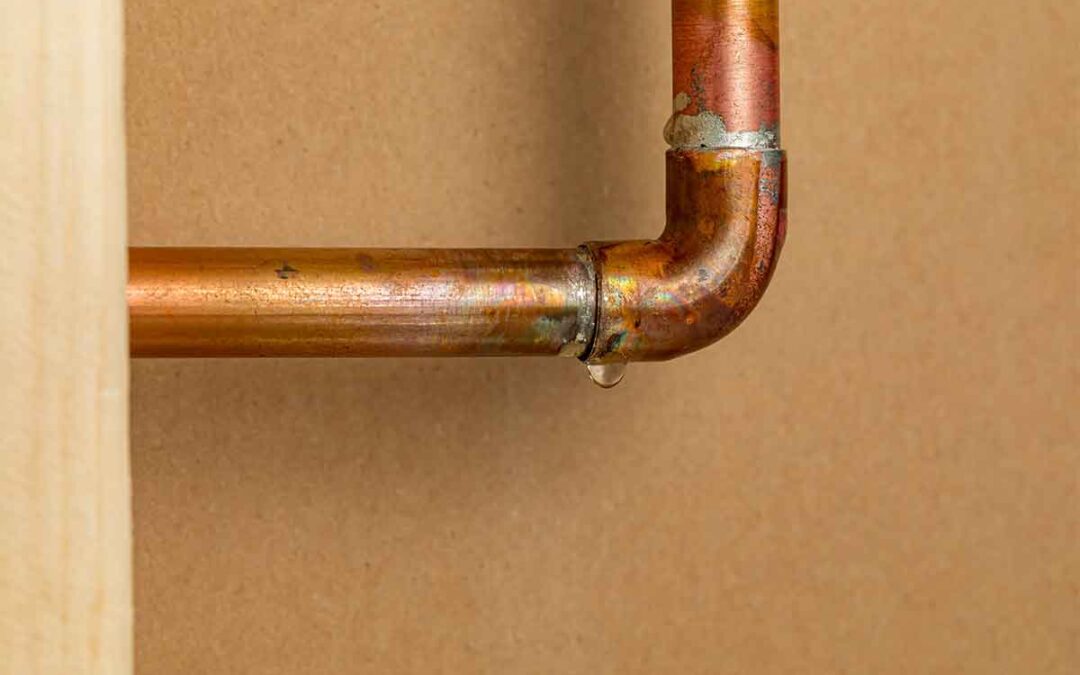
A spot repair does exactly what it sounds like. Your plumber finds the one place the pipe has failed, cuts out that section, and puts in a new piece. Done well, it stops that specific leak. It does nothing for the twenty feet of identical pipe running through the same wall, buried under the same slab, carrying the same water at the same pressure.
A whole-home repipe replaces the aging supply lines that bring water to your fixtures, usually with copper or PEX. It is a bigger project, and for a lot of homes it is more than you need. If you have solid copper and a fitting gave out because someone overtightened it back in 1994, patch it and move on. That is an honest spot repair.
Leak count alone does not settle the question, because two leaks can mean two very different things depending on the pipe. Two failures in copper spread ten years apart is one story. Two failures in old galvanized or early poly inside twelve months is another entirely. Our pipe repair and repiping services cover both ends of that, and the first job on any visit is figuring out which situation you are actually in.
When Two Leaks Mean You Have a Bigger Problem
A second leak on the same aging supply line within roughly a year is usually a signal, not a coincidence.
Pipe tends to fail for reasons that affect the whole run, not one lonely inch of it. The same corrosive water, the same mineral load, the same pressure, the same age. When a line has degraded enough to spring one leak, the rest of that line is often close behind. So when the second one shows up soon after the first, you are usually watching a pattern start rather than hitting a fluke twice.
That said, treat “roughly a year” as a starting point, not a stopwatch. A few things move the threshold.
Pipe Material
This is the big one, and we get into it below. Old galvanized and early poly drop the threshold. A single repeat leak can mean a lot.
Leak Location
Two leaks in the same wall or the same slab run point harder at a system-wide problem than two leaks at opposite ends of the house.
Water Pressure
Chronically high pressure stresses every joint and every thin spot. If your pressure runs high, leaks often cluster.
Home Age
A 1980s or 1990s home in the Temecula Valley is squarely in the window where original supply pipe can start giving out.
Two leaks in different materials in different parts of a newer home is worth watching. Two leaks on the same old line in an older home is worth a serious conversation about replacement.
How Your Pipe Material Changes the Decision (Galvanized Steel and Polybutylene)
What your pipes are made of tells you most of what you need to know about whether more leaks are coming. If you are not sure what you have, it is worth taking a few minutes to figure out what pipes your home has.
Galvanized Steel
Galvanized steel was standard in older construction, and plenty of it is still buried in Temecula Valley homes. It corrodes from the inside out. The zinc coating wears away, the steel underneath rusts, and mineral scale builds up until the pipe walls are thin and the inside diameter is choked down. By the time one section leaks, the rest of the run is usually corroding on the same timeline. Our hard water tends to speed all of this along. A leak in galvanized steel is rarely a one-off.
Polybutylene
Polybutylene is the gray plastic pipe used widely from the late 1970s into the mid-1990s, which puts it right in the window for homes built in that era. It tends to fail at the fittings and can grow brittle over time. The failure history was significant enough to draw national attention, culminating in widespread litigation and a major class-action settlement over the material’s tendency to fail. If you have early poly and you have had one fitting let go, the other fittings are the same age and the same design. More are often on the way.
Copper and PEX
Copper and PEX behave differently. Copper is durable and often lasts decades, so a single leak can genuinely be a one-time event from a bad joint or an isolated bit of corrosion. PEX is a modern approved supply material under the Uniform Plumbing Code and does not corrode the way metal does. With these, spot repair is often the correct and honest answer, and we will tell you so.
In our experience across Temecula Valley homes, over 25-plus years and more than a thousand five-star reviews, aging galvanized and early polybutylene rarely give you just one warning. When we open a wall on a mid-’80s house and find scale-choked galvanized or gray poly with a failed fitting, a second leak on that same run within the year is common, and we usually see more within a couple of seasons after that. It is one reason we are careful about our recommendations under CA License #1010329, because telling someone to keep patching a run that is quietly failing everywhere does not do them any favors.
The same two leaks mean two different things. In copper, watch and wait. In old galvanized or early poly, one repeat leak is often the whole story. We get into this pattern more in why older Temecula and Murrieta homes often need repiping.
What Drives the Cost of a Repipe vs Repeated Spot Repairs
Every home is different, so instead of a made-up number, here is what actually moves the cost either direction.
Cost of a Spot Repair
A spot repair is priced mostly by access. A leak in an accessible wall or under a sink is straightforward. A leak inside a slab is a different job, because reaching it means detecting the exact spot and opening the concrete, and then there is wall or floor repair after the plumbing is done. That patch-and-restore cost is easy to underestimate. Our slab leak detection work exists precisely because slab leaks are hard to reach and expensive to guess at.
Cost of a Whole-Home Repipe
A whole-home repipe is priced by home size, number of fixtures, how the pipe routes through your walls and attic, and how much wall repair the run requires. Bigger home, more bathrooms, trickier routing, higher cost.
Now do the math on stacked patches. Each spot repair carries its own detection, access, and wall-repair cost. Pay that three or four times on a failing line and you have spent real money and still have failing pipe everywhere you did not touch. One planned whole-home repipe opens the walls once, replaces the whole system, and closes them once. On old galvanized or early poly, the repeated-patch road often costs more over a couple of years than the replacement would have.
There is also the quiet cost of leaks you have not caught yet. The EPA notes through its Fix a Leak Week guidance that household leaks waste a startling amount of water, which shows up on your bill month after month. Repipe projects are a real expense, and financing is available, so ask about current options when you get your assessment.
Signs It Is Time to Stop Patching and Call a Pro
You do not need to wait for a flood. These are the signals that the patching phase is over:
-
Recurring pinholes on the same line, especially in older copper or galvanized.
-
Discolored or rusty water, which often points to corrosion inside metal pipe.
-
Dropping water pressure across the house, a common sign of galvanized scaling shut.
-
A warm spot on the slab floor, which can mean a hot-water line is leaking under the concrete.
-
A water bill that climbs with no change in how you use water.
The threshold for picking up the phone is simple. Once you have had a second leak on the same aging line, or you are seeing discolored water or falling pressure, it is worth a licensed assessment before you authorize another patch. A camera inspection and leak detection show what is really happening inside the walls and the slab, so the repair-versus-replace call is based on evidence instead of a guess. Canyon Hills Plumbing is licensed in California (License #1010329), which matters when someone is telling you whether to spend money patching or replacing.
Get a Straight Answer From Canyon Hills Plumbing
You do not have to make this call alone or on a hunch. A licensed team can look at your actual pipe material, your leak history, your water pressure, and how your home is laid out, then give you an honest recommendation. Sometimes that is a spot repair, and we will say so. Sometimes the pattern is clear and a repipe will save you money and headaches, and we will say that too.
If you have had that second leak and you are tired of guessing, reach out to Canyon Hills Plumbing for a repair-vs-replace assessment. We serve Temecula, Murrieta, Lake Elsinore, Menifee, and Wildomar, and we know the housing builds and the water out here. #BecausePlumbingHappens